
If you’re searching for a weight loss clinic serving Rancho Santa Fe, CA, you need more than general advice. At The Adapt Lab in Solana Beach, Dr. Chad Larson leads a precision-guided approach that starts with advanced lab testing to assess blood sugar, hormones, and metabolic function. Your program is built around what your body needs, with ongoing adjustments based on measurable progress.
You work directly with a licensed naturopathic doctor who explains your results and guides each step with clinical accuracy. The focus is on restoring metabolic health to support sustainable weight management and steady energy, so you can feel confident in your progress and stay active across daily life in Rancho Santa Fe, including walks along the Rancho Santa Fe Trail and time outdoors.
Every Rancho Santa Fe resident who comes to us starts with the same foundation: advanced testing and a thorough clinical review. From there, your plan reflects what your labs actually show.
At our weight loss clinic serving Rancho Santa Fe, your first appointment is a focused, in-depth session with Dr. Larson. He reviews your health history, past weight management efforts, medications, sleep, digestion, energy levels, and stress.
This depth matters for medical weight loss because surface-level symptoms rarely tell the full story. Patterns that look unrelated often trace back to the same metabolic root, and surfacing them early shapes a far more accurate plan.
Before making recommendations, we assess key biomarkers, including fasting insulin, fasting glucose, HOMA-IR, A1C (a measure of average blood sugar over the past 2 to 3 months), full thyroid workup, sex hormone profile, hs-CRP, and a complete lipid panel. These markers reveal early signs of metabolic dysfunction, so we can target the underlying drivers directly.
HOMA-IR, the calculated ratio between fasting insulin and glucose, often flags insulin resistance years before A1C crosses the prediabetic line. That kind of early signal lets us address the root cause, not chase symptoms.
Your food and movement plan is designed around your actual calendar, preferences, and pace of life. Rather than relying on restrictive protocols or inflexible templates, your plan is structured around your schedule and how you already manage your day.
For Rancho Santa Fe residents, that means plans that work around equestrian mornings at the San Dieguito River Park, weekend stops at the Helen Woodward farmers market, private training sessions, or quiet hikes through Black Mountain Open Space. The plan fits your life so you can actually follow it.
Medication is a tool in your program, never the plan itself. We only add a prescription when a specific marker crosses a threshold that warrants additional support, and we explain exactly which biomarker triggered the recommendation.
You’ll know what the medication does, how long you’ll likely need it, and how and when medication is tapered as your markers improve. That clarity keeps you in control of your treatment at our weight loss clinic near Rancho Santa Fe, CA.
For patients working with a weight loss clinic serving Rancho Santa Fe, your lab results determine if medication becomes part of your program. If it does, it is selected to match your specific metabolic patterns.
At The Adapt Lab, Dr. Chad Larson integrates prescription support into a broader, data-driven plan that includes nutrition, movement, and ongoing lab review. Every decision is clinically guided, regularly monitored, and adjusted based on how your biomarkers respond.
GLP-1 therapy uses a synthetic form of glucagon-like peptide-1, a naturally occurring hormone your gut releases after meals to signal fullness and slow digestion. It’s prescribed when your labs show appetite dysregulation alongside insulin resistance, helping you recognize satiety sooner, stabilize blood sugar through the day, and reduce the mid-afternoon energy dips that often drive snacking. GLP-1 therapy enhances your nutrition and movement strategy rather than replacing it.
Dr. Larson selects tirzepatide as his preferred peptide for weight management when your labs show metabolic resistance. It activates both GLP-1 and GIP receptors simultaneously, addressing appetite and blood sugar through a single dual-pathway mechanism. The combined action makes it particularly effective for patients whose data points to layered metabolic drivers rather than a single imbalance.
Two FDA-approved brands carry this peptide:
Your dosing is adjusted based on how your biomarkers respond over time, not a fixed ladder, so the protocol stays aligned with your physiology at every check-in.
At The Adapt Lab, Dr. Larson uses semaglutide to restore fullness signaling when satiety is the core issue and glucose handling is less disrupted. This single-receptor GLP-1 agonist helps you feel satisfied with balanced meals instead of fighting persistent hunger signals, which often becomes the deciding factor for patients whose habits are strong but progress has stalled.
Semaglutide is prescribed when your labs point to appetite-regulating hormones that aren’t doing their job, and it builds on the nutrition and movement work already in place rather than replacing it.
Two FDA-approved brands carry this peptide:
Your medication selection reflects your glucose patterns, appetite-regulating hormones, and metabolic goals, so every decision is grounded in measurable data instead of a default prescription.
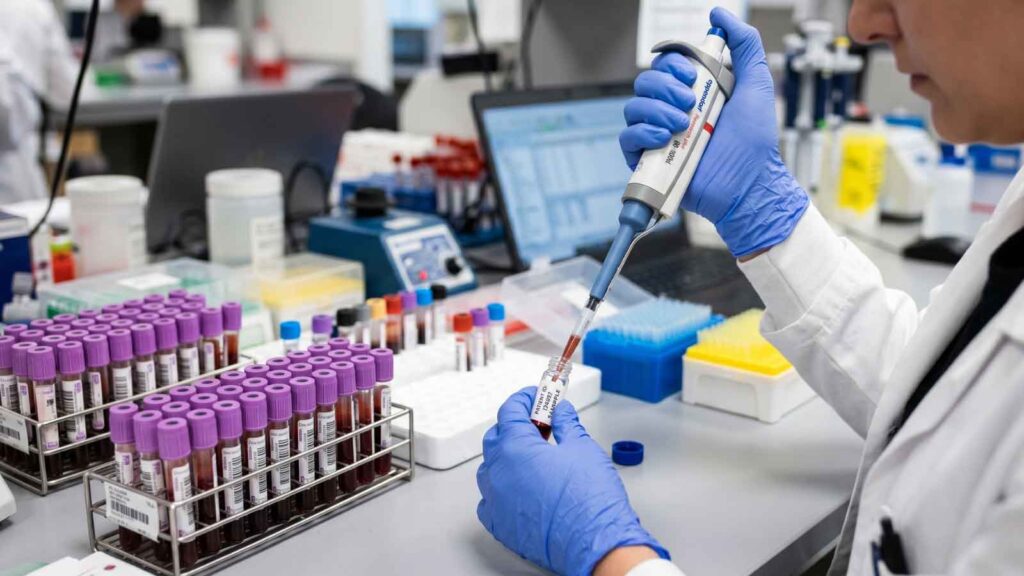
At The Adapt Lab, your program reflects your metabolic function from the first appointment. Every recommendation traces back to a clinical signal in your data, not a default protocol.
Not every person needs the same support to lose weight, and not every patient benefits from generic programs. Weight loss in Rancho Santa Fe typically fits three clinical profiles where lab-first work makes the biggest difference.
Polycystic Ovary Syndrome (PCOS) often drives weight gain through insulin resistance and androgen imbalance, which standard diet-and-exercise advice rarely addresses. You can follow every rule in a mainstream plan and still see limited progress.
At The Adapt Lab, Dr. Chad Larson uses targeted hormone testing, including fasting insulin, HOMA-IR, total and free testosterone, dehydroepiandrosterone sulfate (DHEA-S), and sex hormone-binding globulin (SHBG), to identify what is driving your symptoms.
Your plan is built around this data, so the underlying hormonal pattern becomes part of the solution. This approach is designed for those seeking a weight loss clinic serving Rancho Santa Fe that prioritizes metabolic accuracy over generalized advice.
Insulin resistance can develop gradually without triggering flags on routine bloodwork. When testing reveals the pattern, the plan shifts to address glucose handling directly.
The strategy moves through nutrition, targeted movement, and medication when clinically indicated. That approach lowers long-term disease risk alongside steady weight loss, which matters far more than a quick drop on the scale.
Executives, founders, and specialists managing demanding schedules need a structured, evidence-informed plan rather than general dietary recommendations. They need a plan that works inside a demanding calendar.
Our program is structured, evidence-informed, and built around real constraints. Progress is measurable, lab-verified, and maintainable without the patient having to manage their own clinical decisions.
Generic advice and inconsistent results often come from plans that overlook your biology. At our weight loss clinic near Rancho Santa Fe, CA, you follow a structured, doctor-led approach guided by your lab data. At The Adapt Lab, Dr. Chad Larson builds your program around measurable biomarkers, so every step reflects how your body responds.
You receive clear direction, ongoing support, and a plan that adjusts as your metabolic health improves. From your initial consultation to lab testing and follow-up, your program stays focused on results you can track. Schedule a private consultation to take the first step toward a more precise and effective approach to weight management.
Most patients notice early appetite and energy shifts within the first 2 to 4 weeks of starting their protocol. Visible body composition changes typically begin between weeks 4 and 8, depending on the medication selected and your baseline metabolic state. Patients with higher insulin resistance often take longer to respond, which is why progress is measured through repeat lab work and biomarker movement, not the scale alone.
Initial consultations and lab draws happen in person at the Solana Beach clinic, which is a short drive from Rancho Santa Fe. Follow-up appointments can be scheduled in person or virtually, depending on what your protocol requires at that stage. Lab retesting is always done in person to keep results consistent and clinically reliable.
The Adapt Lab operates on an out-of-pocket model, which keeps clinical decisions tied to your biology rather than insurance restrictions. Some patients submit superbills to their insurance for partial reimbursement on lab work or consultations, and certain prescriptions may be covered through your pharmacy benefits. Specific pricing and what your insurance may apply toward are discussed during your consultation.
Not necessarily. Medication duration depends on what your biomarkers show across the protocol, and Dr. Larson maps a clear exit strategy from the start. Once your HOMA-IR, glucose patterns, and hormonal markers stabilize, the protocol typically transitions to a tapered dose and eventually to maintenance through nutrition, movement, and periodic lab review. The goal is durable metabolic function, not indefinite prescription dependence.
Side effects from GLP-1 therapy, tirzepatide, or semaglutide are most common during the first few weeks as your body adjusts. Dr. Larson reviews symptoms at each follow-up and can adjust dose, timing, or switch medications if your response calls for it. Reporting side effects between appointments is encouraged so the protocol stays comfortable and clinically aligned with how your body is actually responding.