You’ve rested your shoulder, applied ice and tried stretching. Yet the pain returns when you paddle out, swing a golf club or go for a run. If your injury keeps interrupting your favorite activities, you may need more than temporary pain relief.
Platelet-rich plasma (PRP) therapy and chiropractic treatment address different aspects of certain sports injuries. Understanding how these treatments work can help you explore your options with a naturopathic doctor who is also a licensed chiropractor. Here’s what you should know about treatment, recovery, and deciding which approach fits your injury.
Think of your body like a car. PRP therapy may help address certain injured tissues, much like repairing a damaged part, while chiropractic treatment focuses on how your body moves, similar to adjusting the wheels for smoother movement. Both can contribute to your recovery, based on your diagnosis and how your body responds to treatment.
PRP therapy uses platelets from your own blood to help support your body’s natural healing process. These platelets release substances called growth factors, which play a role in tissue repair. However, PRP does not work equally well for every sports injury.
During treatment, your naturopathic doctor draws a small blood sample and uses a centrifuge to separate and concentrate the platelets. A qualified doctor then injects the PRP into the injured area, sometimes using ultrasound to guide the injection.
PRP may help reduce pain and improve movement in certain tendon and joint conditions. However, feeling better does not always mean your injured tissue has fully healed.
An injury can change how you move, placing additional stress on nearby muscles and joints. For example, if you’re a surfer with shoulder pain, you might compensate by placing more strain on your lower back when paddling.
Chiropractic treatment may help address these movement problems through:
These techniques focus on improving physical function rather than directly repairing torn tendons or ligaments.
PRP and chiropractic treatment address different aspects of specific musculoskeletal injuries. PRP may help with selected tendon or joint conditions, while chiropractic treatment may address associated movement restrictions.
For example, if you experience knee pain while running, limited hip mobility may affect how your body distributes weight during movement. Addressing that restriction may be useful alongside treatment for a diagnosed knee condition.
However, combining PRP and chiropractic treatment does not guarantee better results than either treatment alone. Some injuries may respond to rehabilitation without injections, while others require different medical interventions. Progressive exercise and appropriate physical loading remain important parts of recovery.
This reflects the broader principles of naturopathic medicine, which considers contributing factors alongside the symptoms you experience.
RELATED ARTICLE: Integrative Health Care in North County San Diego: Combining the Best of Both Worlds
If your symptoms continue despite appropriate rest, exercise therapy, or other conservative treatments, PRP may be worth discussing with a qualified doctor. Chiropractic treatment may also be considered when joint restrictions or movement problems contribute to your discomfort.
You may benefit from an evaluation if you are:
Discover personalized health insights and connect with Dr. Chad Larson for a comprehensive approach to wellness that addresses the root causes of your health concerns.
Research shows potential benefits for certain tendon conditions and knee osteoarthritis, but evidence remains mixed for other sports injuries. Results depend on the diagnosis, injury severity and available treatment options.
PRP isn’t suitable for every injury. Certain conditions may respond better to rehabilitation, medication, or other medical treatments. Severe structural injuries may require orthopedic evaluation rather than an injection.
Your doctor should also review possible risks, including:
Seek prompt medical evaluation if you experience severe weakness, major joint instability, an inability to bear weight, or symptoms suggesting a fracture. These problems may require imaging or specialized treatment before considering PRP.
A structured recovery plan typically includes an injury evaluation, treatment when appropriate, and progressive rehabilitation. Your naturopathic doctor adjusts each stage according to your diagnosis and response to physical activity.
Your doctor reviews your injury history, activity level, previous treatments, muscle strength, and joint stability. The examination helps identify which structures may be injured and what additional testing you need.
Imaging tests may help clarify the diagnosis:
Your naturopathic doctor may also consider laboratory testing when your medical history suggests nutritional deficiencies or other health concerns that could affect recovery. Not every sports injury requires laboratory testing.
If PRP is appropriate, the injection takes place under sterile conditions, and you receive instructions for protecting the treated area. During the first few days, you may need to limit strenuous activities and avoid excessive pressure on the injection site.
Early recovery generally focuses on managing discomfort and allowing controlled movement. Chiropractic treatment, when appropriate, may initially focus on surrounding areas rather than applying direct pressure to the newly injected tissues.
Your doctor may advise you to avoid nonsteroidal anti-inflammatory drugs (NSAIDs), such as ibuprofen, for a specified period around your PRP procedure. Follow your prescribed medication instructions and consult your prescribing doctor before making changes.
Discover personalized health insights and connect with Dr. Chad Larson for a comprehensive approach to wellness that addresses the root causes of your health concerns.
As your symptoms improve, your recovery plan gradually introduces gentle stretching, mobility exercises, and light strengthening activities.
Your recovery plan may also introduce gentle joint mobilization and guided exercises based on how well your injured area tolerates activity.
The goal during this stage is to restore comfortable movement without increasing stress beyond what your healing tissues can tolerate.
Once your injury can tolerate more activity, your doctor introduces progressive strengthening and exercises that match your sport.
For example, if you’re recovering from a running injury, your plan may include controlled calf exercises, balance training and gradual running drills. These activities help prepare your muscles and tendons for the physical demands of running.
Exercise intensity increases according to your symptoms, physical function and treatment protocol.
Returning to your usual routine also means addressing factors that may have contributed to your injury.
Your clinical team may evaluate your exercise technique, training schedule and how quickly you increase activity. Sudden increases in running distance, lifting intensity or repetitive movements can place excessive demands on muscles and tendons.
Adjusting your training routine, allowing adequate recovery between sessions and maintaining appropriate exercise technique may help reduce your risk of another injury.
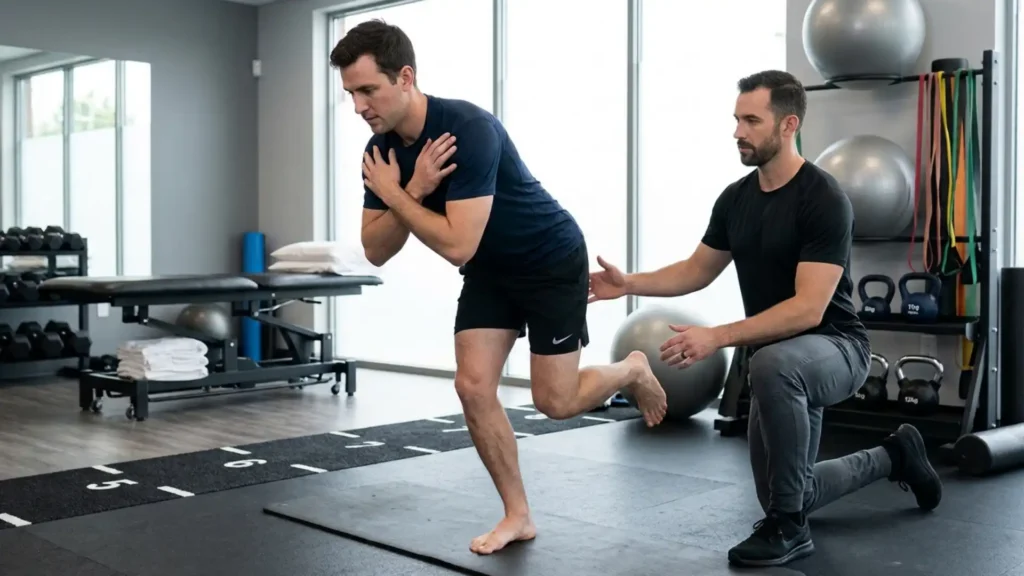
Soreness from a PRP injection often improves within several days, but returning to demanding exercise may take weeks or months. Your timeline depends on the treated tissue, injury severity, and response to rehabilitation.
Some tendon rehabilitation protocols introduce controlled movement within days and progressive strengthening over the following weeks. However, these timelines are not universal. Your doctor should provide instructions specific to your condition.
Your doctor evaluates several factors before recommending a return to your usual activities:
These factors help your doctor determine when your body is ready for more demanding activities rather than relying on a fixed recovery date.
Not every injury heals at the same pace. If your pain continues, your mobility remains limited, or your strength stops improving, your doctor may need to reassess your condition.
Follow-up visits help identify stalled progress and determine if additional testing, changes to rehabilitation, or a different treatment approach may be necessary.
Yes. Your body needs proper nutrition to repair damaged tissues, maintain energy and support recovery. Your food choices also affect blood sugar regulation, inflammation and muscle health, making nutrition an important part of your rehabilitation plan.
Protein helps your body repair damaged muscles and tissues, while vitamins and minerals support normal healing processes. Maintaining healthy blood sugar levels and getting enough nutrients can also help your body meet the demands of recovery.
Eating enough protein throughout the day and maintaining adequate calorie intake are important, especially when your activity level changes because of an injury.
If your recovery is slower than expected, targeted laboratory testing may help identify nutritional deficiencies, anemia, or relevant metabolic health concerns when your symptoms and medical history indicate a need for further evaluation.
Discover personalized health insights and connect with Dr. Chad Larson for a comprehensive approach to wellness that addresses the root causes of your health concerns.
Knowing which nutrients your body needs is important, but putting that knowledge into your daily routine matters just as much.
One-on-one nutrition counseling can help you plan balanced meals, adjust your protein intake, and meet your energy needs during rehabilitation. A naturopathic doctor with training in nutritional and metabolic health can recommend evidence-informed dietary changes based on your medical history and identified needs.
Finding the right naturopathic doctor for your sports injury involves checking more than online reviews. Your doctor should have appropriate credentials, relevant clinical experience, and a clear process for explaining the risks and limitations of treatment.
In California, a licensed naturopathic doctor must complete an approved naturopathic medical education program, pass required licensing examinations, and meet state licensing requirements.
The term naturopath does not carry the same professional licensing requirements in California. Someone using that title may not hold the credentials needed to diagnose medical conditions or provide regulated treatments.
If you’re considering PRP and chiropractic treatment, verify your provider’s current licenses and relevant training. Chiropractic practice requires separate professional authorization, and naturopathic licensure alone does not automatically authorize every type of regenerative injection.
Additional training also does not automatically expand a doctor’s legal scope of practice.
A doctor who treats sports injuries should understand the condition you’re dealing with and explain which treatments have supporting evidence.
Ask about their experience with your type of injury, the expected benefits of treatment, and the situations in which another medical approach may be more appropriate.
Your doctor should give you realistic expectations rather than promise complete healing or a guaranteed return to sports.
Before treatment, ask how your doctor monitors complications, schedules follow-up visits, and responds if your symptoms worsen.
You should also understand when a referral to an orthopedic specialist or another qualified medical professional may be necessary.
Clear communication about safety and treatment limitations is an important part of choosing a doctor.
Before starting PRP therapy, you may have questions about discomfort, costs, and how it compares to other treatments. Understanding what to expect can help you make informed decisions about your recovery. Here are answers to some common questions about PRP treatment.
Yes. Mild pain, swelling, or soreness around the injection site is common during the first few days after PRP therapy. Your doctor can explain how to manage discomfort and which symptoms require medical attention.
Many insurance plans do not cover PRP injections because insurers may consider them investigational for certain conditions. Coverage varies by provider and treatment. Check your benefits and ask about out-of-pocket expenses before scheduling your procedure.
Cortisone injections reduce inflammation and may provide faster pain relief for certain conditions. However, repeated injections can weaken tendons in some situations.
PRP uses platelet-derived components as a potential treatment for certain tendon and joint conditions. Unlike cortisone, it does not primarily aim to suppress inflammation. The two treatments have different mechanisms, and research has not shown that PRP consistently provides better results for every condition.
LEARN MORE: What to Expect at Your First Metabolic Health Consultation
Discover personalized health insights and connect with Dr. Chad Larson for a comprehensive approach to wellness that addresses the root causes of your health concerns.
If you’re considering PRP or chiropractic treatment for an ongoing sports injury, a clinical evaluation can help identify which options fit your condition.
At The Adapt Lab in Solana Beach, Dr. Chad Larson is a naturopathic doctor and chiropractor who offers PRP-related treatment options, chiropractic treatment, and nutrition counseling for patients in Encinitas and throughout North County San Diego.
His Metabolic Magic Method is a metabolic health framework built on evidence-informed strategies and advanced diagnostics, and it reflects The Adapt Lab’s broader focus on metabolic health. Nutritional and metabolic factors may also be considered when relevant to your injury recovery.
Schedule your sports injury consultation at The Adapt Lab to explore your treatment options and find out which approaches may support your recovery goals.

You’ve rested your shoulder, applied ice and tried stretching. Yet the pa...
Read MoreJoint pain can make everyday activities harder than they should be. You mig...
Read MoreYou get a full night’s sleep but still wake up exhausted. Your periods be...
Read MoreYou eat well, exercise regularly and still struggle to lose weight. By mida...
Read More